Case Study
California DHCS
DHCS was a client of Pondera Solutions, using Fraud Detect and Pondera’s case management SaaS, which I helped design and build.
DHCS provides Californians with access to affordable, integrated, high-quality health care, including medical, dental, mental health, substance use treatment services and long-term care. DHCS funds health care services for more than 15.4 million Medi-Cal beneficiaries.
Outcome: Replaced five separate timekeeping tools with one calendar-based tracker, launched to 700+ California government professionals.
Executive Summary / Impact
Deconstructed and unified 5 separate, fragmented legacy time-tracking tools into a centralized SaaS product ecosystem.
Deployed to state fraud investigators, managers, and data analysts across California.
Medi-Cal beneficiaries served by DHCS through the products I helped design.
My Role
I ran product design end to end as the lead designer: scoping, interviews with users and stakeholders, usability testing, and close work with product, engineering and other teams. I also ran usability audits and led remediation for VPAT compliance.
The Challenge
The challenge was twofold: first, architectural, replacing a rigid, granular data-entry model with a fluid, calendar-based UX; second, organizational, navigating the institutional inertia of five distinct state teams to establish a single, unified operational baseline. Although the new Case Management application included a time tracking feature, it required users to enter hours for each day separately within each case, making the process cumbersome and time-consuming.
The Solution
I met with investigators, managers, and analysts from each of the five different teams to conduct interviews, create journey maps, and develop personas, gaining a clear understanding of their workflows, habits, and time-tracking needs. I presented various concepts, prototypes and ideas to both users and stakeholders, gathering feedback that ultimately led to alignment and approval across all five teams.
I designed a time tracking system that enabled investigators, analysts, and managers to easily add hours using a calendar interface. Users could simply click on a day, search for or enter a case number, and log their time. This streamlined approach simplified time tracking and auditing for managers, allowing them to quickly view hours for the entire team or individual members at a glance.
The Result
The new case and time tracking system was launched to over 700 government professionals in California, streamlining their workflows and enhancing time tracking efficiency. With reduced administrative tasks, analysts and investigators could dedicate more time to combating fraud.
Related case study: Fraud Detect, Pondera’s fraud detection SaaS that DHCS used alongside the case management product described here.
Personas
My first step was to interview the managers, investigators, and analysts of each team, and learn about their current methods for tracking time, what their needs were, and how the current system was not working well for them. This allowed me to understand and empathize with the needs of the different user types and what issues they shared together.

Time Tracking
The application empowered users to view their case time at a glance, providing a summary of hours and cases for each day, week, and month. This feature allowed for easy auditing of entered hours, which was a win for DHCS and meant fewer hours spent tracking time. It also led to the design and development of a mobile field companion app, to allow field investigators to track time in the field, along with note taking, gathering evidence, and conducting interviews.
Month View

Months / Year Picker

Edit Entire Week or Day
My time tracking solution enabled users to effortlessly copy an entire week or day and paste it into another period, or even clear a whole week or day if needed. This feature saved users valuable time by eliminating the need to re-enter the same case information repeatedly.
Edit Week

Edit Day

Efficient Time Entry
To streamline the time tracking entry workflow, I designed a feature that allows users to copy, edit, paste, view, and manage time entries directly from the main interface.
Edit Entry

Add / Edit Time

Color Guide
Architected a design system that successfully survived a major corporate acquisition, scaling from its original state agency deployment to meet the global compliance and branding standards of Thomson Reuters.

More Case Studies


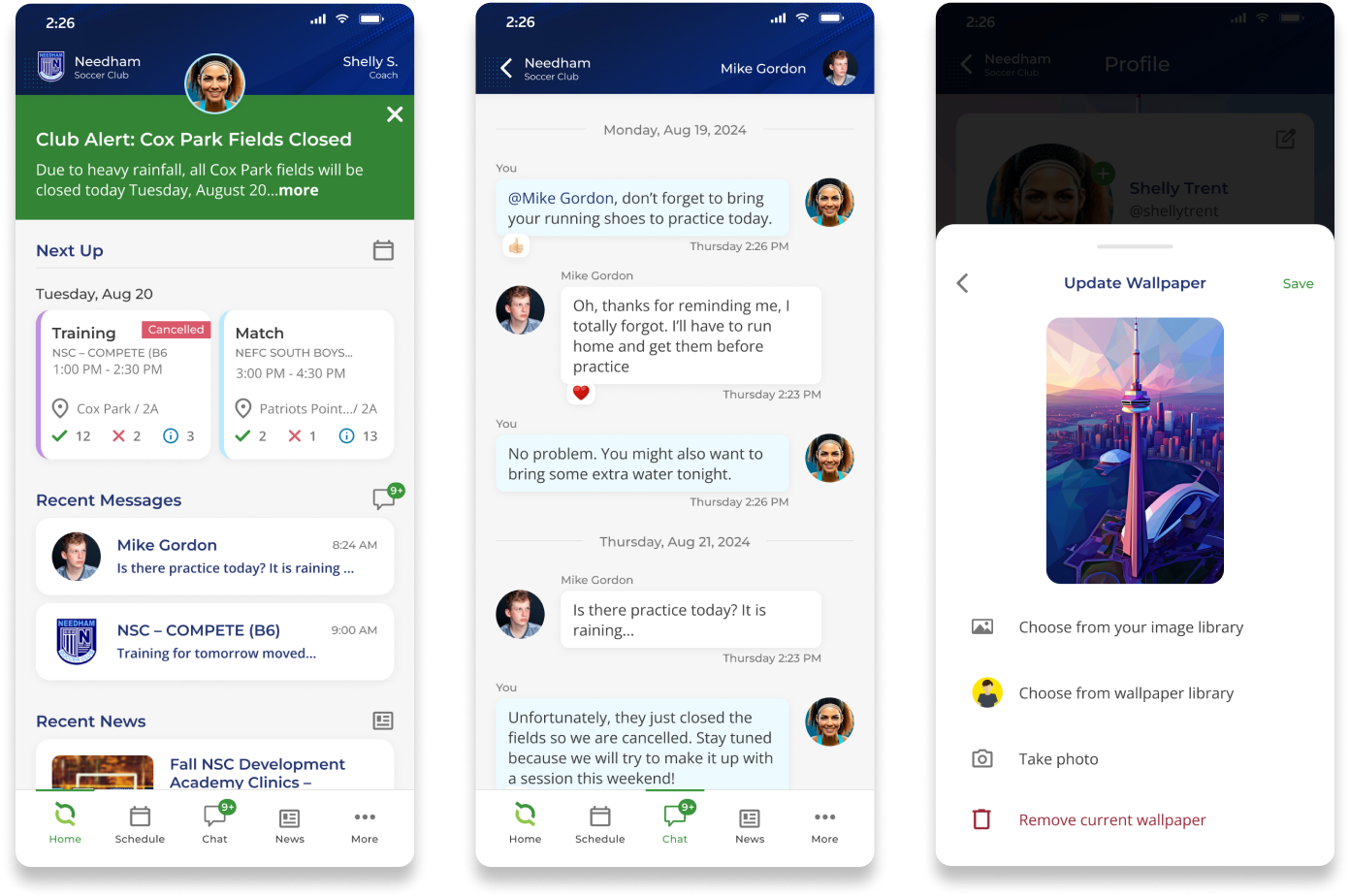
GotSport
GotSport (GotSoccer) is the leading provider of soccer software in the USA. They have been developing tools to help get players on the field since 1996, and help make things simple and easy for the sports community.
Outcome: Shipped a redesigned mobile app with a login dashboard, simplified chat and profiles, and a tokenized theme system for white-labeling.
- UX Research
- User Flows
- Personas
- Wireframes
- Design System
- Accessibility
- UX Design
- UI Design
- Prototyping
- Chat
- Mobile App

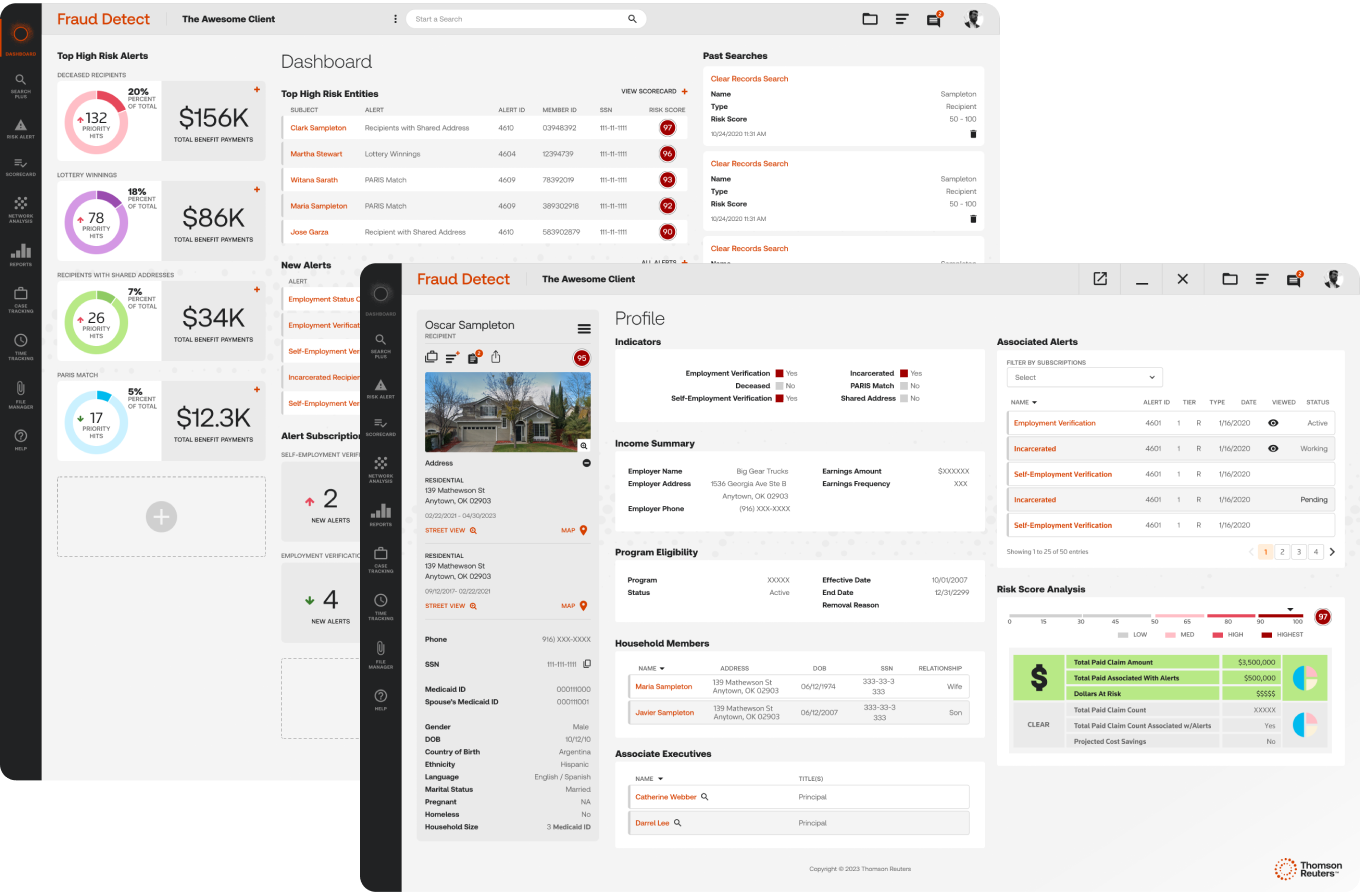
Thomson Reuters
Thomson Reuters is a global AI and technology company empowering professionals with trusted content and workflow automation. The Fraud Detect product suite utilizes expert machine-learning technology for government programs in Healthcare, SNAP, and Unemployment.
Outcome: $130M in duplicate payments and $50M in overpayments identified, leading to $18.7M in recoveries by the Medicaid Inspector General. Pondera was acquired by Thomson Reuters for $124M.
- UX Research
- User Flows
- Personas
- Wireframes
- Design System
- Accessibility
- UX Design
- UI Design
- Prototyping
- Search
- reporting
- Web App
- Data Visualization